
Tinnitus Causes: Why Your Ears Ring and When to Get Help
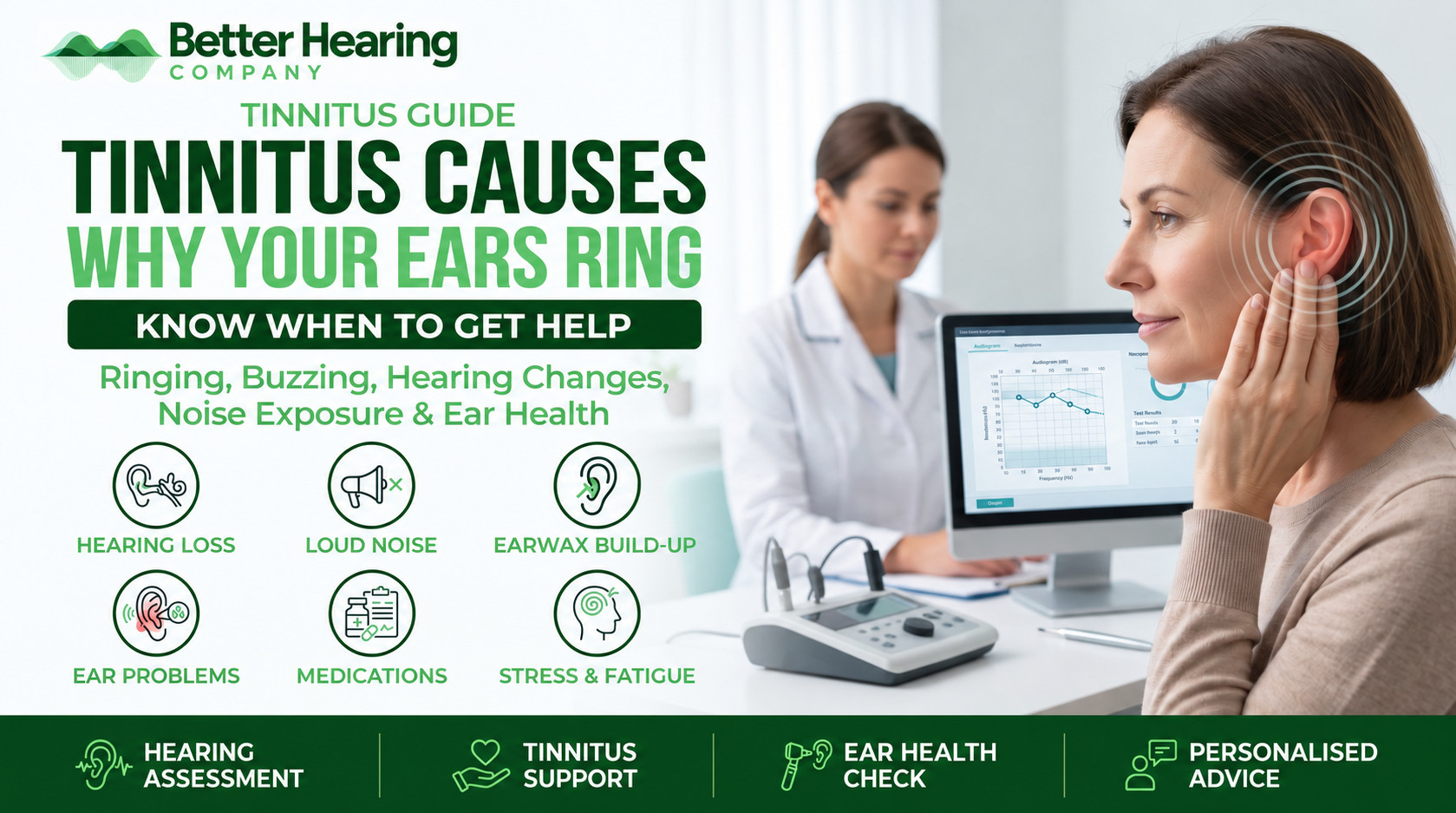
Hearing a sound that nobody else can hear can be confusing. It may sound like ringing, buzzing, humming, whistling or another noise inside your ears or head.
Understanding common tinnitus causes can make the experience less mysterious and help you recognise when a professional hearing assessment may be useful.
Tinnitus itself is a symptom rather than a single disease, and different people can experience it for different reasons.
What Is Tinnitus?
Tinnitus is the perception of sound when there is no corresponding external sound around you.
It may affect one ear, both ears or seem to come from somewhere inside the head.
For some people it is occasional and barely noticeable. For others, it can be persistent and interfere with concentration, relaxation or sleep.
What Does Tinnitus Sound Like?
Ringing is probably the best-known description, but tinnitus does not always sound like a ring.
People may describe:
- Buzzing
- Whistling
- Humming
- Hissing
- Clicking
- Whooshing
- Pulsing
The sound may be quiet or loud, constant or intermittent.
6 Common Tinnitus Causes and Associations
1. Changes in Hearing
Tinnitus is often associated with hearing changes.
When the auditory system receives less sound information than before, changes in how the hearing and nervous systems process sound may contribute to tinnitus perception.
This is one reason a hearing assessment is commonly included when tinnitus is investigated.
2. Loud Noise Exposure
Exposure to loud sound can affect hearing and may also be associated with tinnitus.
Some people notice temporary ringing after a concert, loud machinery or another noisy environment.
Repeated or excessive noise exposure can also contribute to longer-term hearing changes, so appropriate hearing protection is important.
3. Earwax Build-Up
Excess earwax can sometimes contribute to tinnitus or make existing tinnitus more noticeable.
An ear examination can determine whether wax is present.
If wax is responsible for a blockage, professional ear wax removal may be appropriate.
4. Ear Problems or Infections
Problems affecting the ear can sometimes occur alongside tinnitus.
If tinnitus begins with ear pain, discharge, pressure, dizziness or a noticeable hearing change, it is sensible to seek professional advice rather than trying to diagnose the cause yourself.
5. Certain Medicines or Health Conditions
Some medicines and medical conditions can be associated with tinnitus.
Do not stop prescribed medication because of tinnitus without speaking with the healthcare professional who prescribed it.
Your medical and hearing history can help a clinician decide whether further investigation or referral may be appropriate.
6. Stress and Tiredness
Stress is not necessarily the underlying cause of tinnitus, but it can make the sound feel more intrusive.
When people become anxious about tinnitus, they may pay more attention to it, which can make it seem louder or more difficult to ignore.
Sleep difficulties can create a similar cycle.
Is Tinnitus a Sign of Hearing Loss?
Not everyone with tinnitus has the same hearing results, but tinnitus and hearing loss frequently occur together.
A person can have subtle hearing changes without immediately noticing that certain frequencies have become more difficult to hear.
A diagnostic hearing assessment can provide useful information about whether hearing changes are present.
When Should Tinnitus Be Checked?
New tinnitus is worth discussing with a healthcare provider or audiologist, particularly when the cause is unclear.
Seek prompt professional assessment if tinnitus:
- Develops suddenly with hearing loss
- Occurs mainly or only in one ear
- Pulses in time with your heartbeat
- Appears with significant dizziness
- Follows an injury
- Is accompanied by other concerning symptoms
Sudden hearing loss should be treated as a time-sensitive medical issue.
What Happens During a Tinnitus Assessment?
A tinnitus assessment usually begins with a detailed conversation.
Your clinician may ask:
- When the tinnitus started
- Whether it affects one or both ears
- What the sound is like
- Whether it changes
- Whether you have hearing difficulties
- Whether you have been exposed to loud noise
- How tinnitus affects sleep or concentration
- Whether you have relevant medical history
Your ears can then be examined and your hearing assessed.
Better Hearing Co. may also use tinnitus pitch and loudness matching where appropriate.
Can Tinnitus Be Managed?
Management depends on the individual and whether an underlying factor can be identified.
For some people, understanding tinnitus and reducing anxiety around the sound can already make it easier to manage.
Depending on the situation, management may involve:
- Hearing support
- Sound-based strategies
- Education about tinnitus
- Hearing aids where appropriate
- Strategies for relaxation and sleep
- Referral to another healthcare professional where needed
There is no universal approach that works for everyone, which is why individual assessment is valuable.
Can Hearing Aids Help With Tinnitus?
If tinnitus occurs alongside hearing loss, appropriately fitted hearing aids may help some people by improving access to everyday environmental sounds.
This can reduce the contrast between tinnitus and the surrounding sound environment.
Whether hearing aids are suitable depends on your hearing results and individual listening needs.
What Can You Do While Waiting for an Assessment?
Try to avoid repeatedly checking whether your tinnitus is still present.
Complete silence can make tinnitus more noticeable for some people, so gentle background sound may be more comfortable.
Protect your ears from genuinely excessive noise, but avoid unnecessary overprotection during ordinary everyday activities.
Good sleep routines and stress management can also be helpful when tinnitus feels intrusive.
Tinnitus Support in Christchurch
If you have recently developed tinnitus or have been living with persistent ringing or buzzing, a professional hearing assessment can provide useful information.
Better Hearing Co. provides tinnitus assessment and support in Christchurch, including hearing testing, ear examination and personalised discussion of appropriate management options.
Frequently Asked Questions
What is the most common cause of tinnitus?
There is no single cause for everyone, although tinnitus is commonly associated with changes in hearing.
Can earwax cause tinnitus?
Excess earwax can sometimes contribute to tinnitus, particularly when it blocks the ear canal.
Does tinnitus always mean hearing loss?
No. Tinnitus can occur in people with different hearing profiles, although hearing loss and tinnitus frequently occur together.
Why is tinnitus louder at night?
Quiet environments can make tinnitus more noticeable because there are fewer external sounds competing for your attention.
Should one-sided tinnitus be checked?
Yes. New tinnitus that affects only one ear should be professionally assessed.
Want to Better Understand Your Tinnitus?
You do not need to work out the cause by yourself.
Book a tinnitus or hearing assessment with Better Hearing Co. in Christchurch to discuss your symptoms and understand your next steps.