
Why Is It Hard to Hear in Noise? Understanding Speech-in-Noise Testing
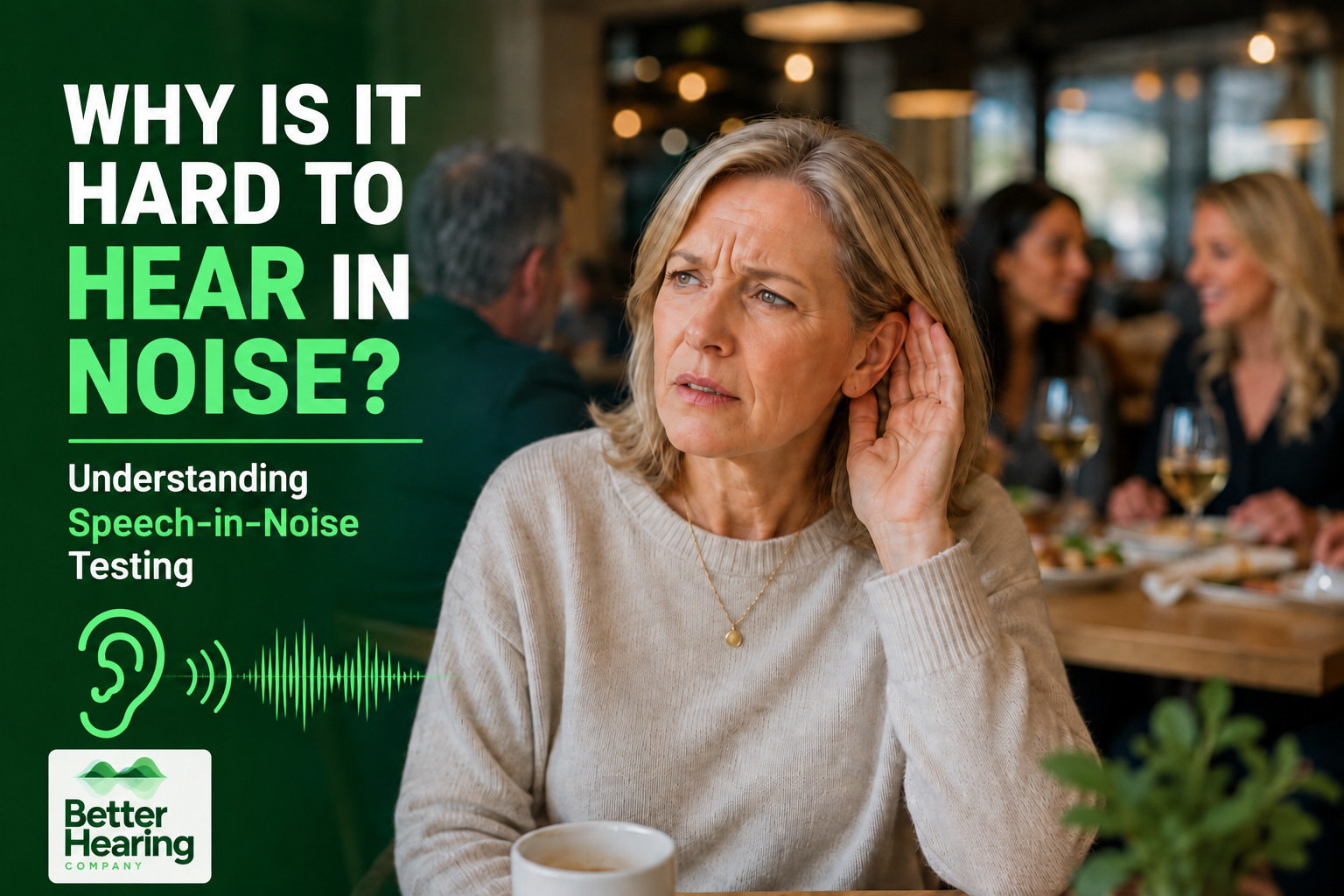
You can have a conversation with someone at home without much difficulty, but find yourself struggling to understand them when you are in a busy restaurant.
Perhaps you can hear that someone is speaking, but the words seem unclear. You may frequently ask people to repeat themselves, watch their lips closely or avoid noisy social situations altogether.
If this sounds familiar, you may wonder why you can hear reasonably well in quiet environments but struggle so much when background noise is present.
The answer is that hearing and understanding speech in noise are not exactly the same thing.
A comprehensive hearing assessment can look at different aspects of your hearing, including how well you detect sounds and, where appropriate, how well you understand speech in more challenging listening environments.
For people experiencing these difficulties, speech-in-noise testing can provide useful information about their everyday hearing experience.
Why Is Hearing in Noise So Difficult?
When you’re sitting in a quiet room talking to one person, the voice you want to hear is usually the most prominent sound.
A busy environment is completely different.
Imagine sitting in a Christchurch café or restaurant. You might have conversations happening at nearby tables, music playing, dishes being moved around, kitchen sounds and people walking past.
Your ears receive all of these sounds at the same time.
Your brain then needs to identify which sounds are important and which ones can be ignored.
This ability to focus on a particular voice while other sounds compete for your attention is an important part of everyday communication.
When hearing difficulties develop, this process can become more challenging.
Why Can I Hear Sounds but Still Struggle With Conversation?
One of the most frustrating experiences for someone with hearing difficulties is being able to hear that another person is talking without actually understanding what they are saying.
You might describe it as:
- “I can hear them, but I can’t understand them.”
- “Everyone sounds like they’re mumbling.”
- “I hear perfectly well at home.”
- “Restaurants are impossible.”
- “I can follow a conversation when it’s just two people.”
- “I struggle when several people are talking.”
These experiences are important to tell your audiologist.
Hearing isn’t simply about detecting whether a sound exists. Understanding speech requires you to process and interpret a complex combination of sounds, particularly when other sounds are competing for your attention.
What Is a Speech-in-Noise Hearing Test?
A speech-in-noise hearing test is designed to assess how well you understand speech when background noise is present.
Rather than listening only for individual tones in a quiet testing environment, speech-in-noise testing introduces competing sound and assesses your ability to understand speech.
This can provide additional information about your hearing and communication abilities.
Better Hearing Co. includes speech-in-noise testing as part of the range of assessment tools that may be used during a comprehensive hearing assessment.
What Happens During Speech-in-Noise Testing?
The exact testing process can vary depending on the assessment being performed.
Generally, you will be asked to listen carefully to speech while background noise is introduced.
You may then be asked to repeat or identify what you heard.
The results can be considered alongside other parts of your hearing assessment.
This is important because no single hearing test provides the complete picture of someone’s hearing experience.
Your hearing history, symptoms, listening difficulties and everyday communication needs all matter.
Who May Benefit From Speech-in-Noise Testing?
Speech-in-noise testing may be particularly relevant if you regularly experience difficulty communicating in challenging environments.
You may want to discuss it with an audiologist if you:
- Struggle to follow conversations in restaurants
- Find group conversations difficult
- Have trouble hearing in meetings
- Frequently ask people to repeat themselves
- Understand one-to-one conversations but struggle in groups
- Rely heavily on lip reading
- Find background noise particularly distracting
- Feel tired after concentrating on conversations
- Avoid noisy social environments
- Can hear sounds but struggle to understand words
These difficulties don’t necessarily mean that hearing aids are required.
The first step is understanding what is happening with your hearing.
Why Are Restaurants So Difficult for Some People?
Restaurants can be particularly challenging listening environments.
There may be several competing sound sources at once, including:
- Conversations from nearby tables
- Music
- Kitchen equipment
- Plates and cutlery
- Traffic outside
- People moving around
- Reverberation from walls and hard surfaces
Even someone with relatively mild hearing difficulties may find this environment considerably harder than a quiet room.
This is why telling your audiologist exactly where you struggle can be just as important as describing how well you hear during a test.
Is Difficulty Hearing in Noise Always Hearing Loss?
Not necessarily.
Difficulty understanding speech in background noise can have different contributing factors.
Your hearing history, age, hearing ability, listening environment and other individual factors can all be relevant.
This is why self-diagnosis isn’t recommended.
If you consistently struggle to follow conversations in noisy environments, a professional hearing assessment can help you better understand your individual situation.
What Does a Comprehensive Hearing Assessment Include?
A comprehensive hearing assessment may involve several different components.
At Better Hearing Co., the assessment process can include discussion of your hearing history, an examination of the ears and hearing tests that provide information about different aspects of hearing.
Depending on your circumstances, testing may include:
- Otoscopy
- Tympanometry
- Pure-tone audiometry
- Speech discrimination testing
- Speech-in-noise testing
The purpose is to build a clearer picture of your hearing rather than relying on a single measurement.
Can Hearing Aids Help With Hearing in Background Noise?
For some people with hearing loss, hearing aids may form part of an appropriate hearing-care plan.
Modern hearing technology includes features designed to help manage difficult listening situations.
However, hearing aids aren’t automatically the right solution for every person who struggles in noise.
The appropriate approach depends on your hearing results, communication needs, lifestyle and personal circumstances.
An audiologist can discuss whether hearing technology is appropriate and explain the options available.
What Can You Do If You Struggle in Noisy Places?
There are practical steps that may make communication easier.
Depending on the environment, you could try:
Choose a quieter location
When meeting friends or family, choosing a quieter part of a restaurant or café can reduce competing background noise.
Face the person you’re speaking with
Being able to see the speaker’s face can provide additional visual information that supports communication.
Reduce distance
Sitting closer to the person you’re speaking with can make their voice easier to hear compared with competing sounds.
Tell people what helps
Let your friends and family know that facing you and speaking clearly can make conversations easier.
Get your hearing checked
If communication difficulties are becoming a regular problem, don’t simply assume that everyone else is mumbling.
A hearing assessment can help identify whether a hearing difficulty may be contributing.
When Should You Book a Hearing Assessment?
You don’t have to wait until hearing problems become severe before arranging an assessment.
Consider speaking with an audiologist if hearing difficulties are affecting your:
- Family conversations
- Social life
- Work
- Telephone conversations
- Restaurant visits
- Group discussions
- Confidence in social situations
Even if you can hear well in quiet surroundings, persistent difficulty understanding speech in noise is worth discussing.
Speech-in-Noise Testing in Christchurch
If you regularly struggle to understand conversations when background noise is present, Better Hearing Co. can help you better understand your hearing.
Based in Christchurch, Better Hearing Co. provides personalised hearing care with assessments designed around the individual’s hearing and communication needs.
A comprehensive assessment can help identify areas of difficulty and provide a basis for discussing appropriate next steps.
Final Thoughts
Being able to hear in a quiet room doesn’t necessarily mean that every listening environment will be easy.
Restaurants, group conversations, meetings and other noisy environments can place much greater demands on your hearing and ability to understand speech.
If you regularly find yourself saying, “I can hear people, but I can’t understand them,” it may be worth arranging a professional hearing assessment.
Understanding the problem is the first step towards finding the right solution.
Ready to understand your hearing better?
Book an appointment with Better Hearing Co. for a personalised hearing assessment in Christchurch.