
Hearing Aid Adjustment Christchurch: When Do You Need a Fine-Tune?
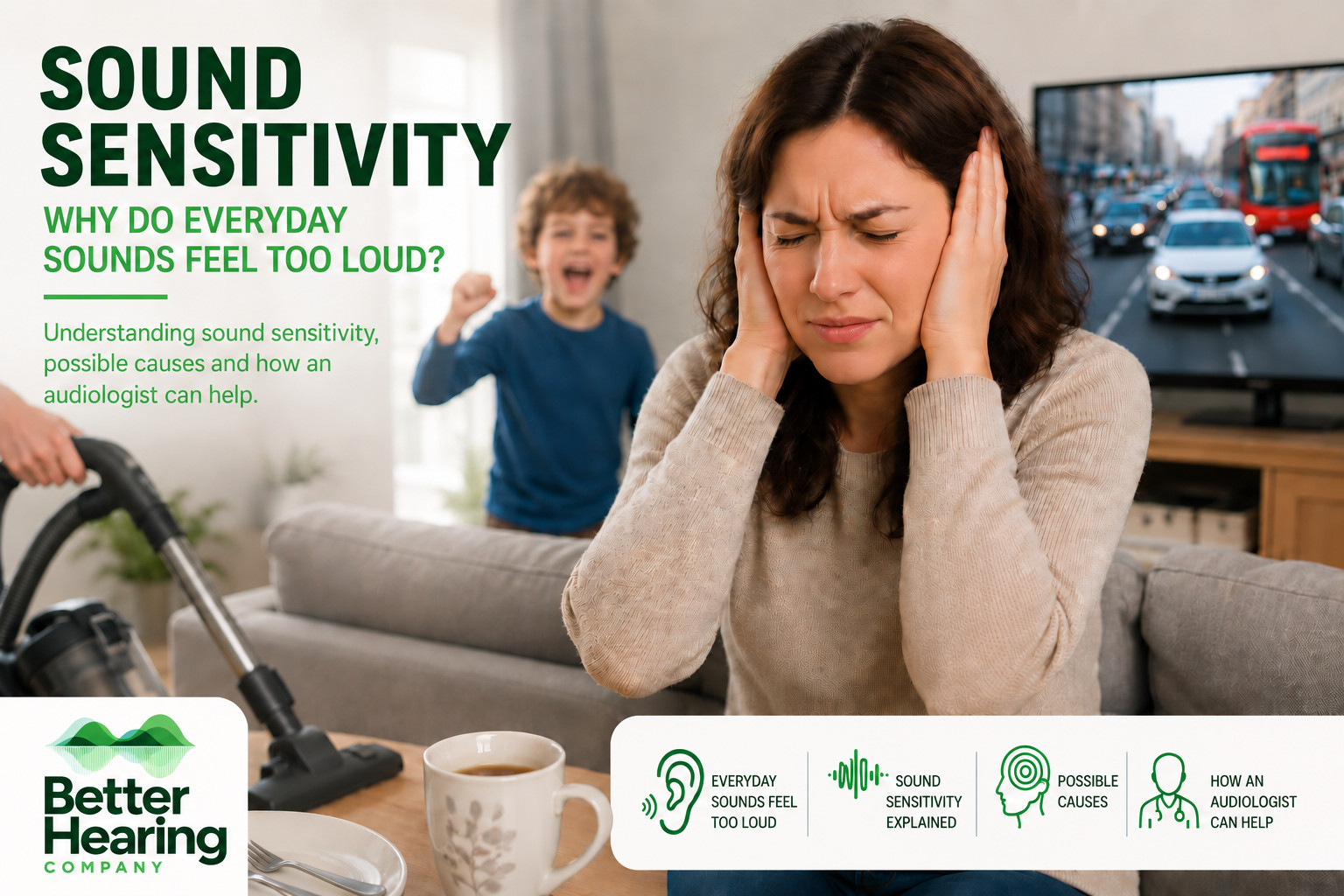
A vacuum cleaner.
Traffic.
Cutlery hitting a plate.
Children playing.
A television.
Normal conversation.
For most people, these are ordinary everyday sounds. But for someone experiencing sound sensitivity, certain sounds may feel excessively loud, uncomfortable or overwhelming.
You may find yourself avoiding busy environments or covering your ears when sounds become difficult to tolerate.
You might even wonder why sounds that don’t bother other people seem so intense to you.
Sound sensitivity can have different causes and presentations, so understanding your individual experience is important.
If changes in your sound tolerance are affecting everyday life, speaking with an appropriate hearing professional can be a useful first step.
What Is Sound Sensitivity?
Sound sensitivity is a general term used to describe situations where ordinary sounds feel unusually uncomfortable, overwhelming or difficult to tolerate.
The experience can vary significantly between people.
For one person, certain high-pitched sounds may be particularly uncomfortable.
For another, busy environments with lots of competing sounds may feel overwhelming.
Some people may notice sensitivity to particular sounds, while others may feel that many everyday noises are difficult to tolerate.
What Does Sound Sensitivity Feel Like?
People experiencing sound sensitivity may describe:
- Everyday sounds feeling excessively loud
- Discomfort around sudden noises
- Difficulty tolerating busy environments
- Feeling overwhelmed when several people are talking
- Wanting to leave noisy places
- Difficulty concentrating because of surrounding sounds
- Avoiding particular environments
- Feeling anxious or frustrated around certain sounds
Not everyone will experience all of these symptoms.
The most important factor is how the experience affects you.
Why Do Normal Sounds Seem Too Loud?
There isn’t one explanation for every person’s sound sensitivity.
Changes in hearing, tinnitus-related experiences and other factors may be relevant depending on the individual.
This is why it isn’t a good idea to assume that you know the cause simply by searching your symptoms online.
A professional assessment can help provide a clearer understanding of your hearing and discuss what you’re experiencing.
Is Sound Sensitivity the Same as Hearing Loss?
No.
Sound sensitivity does not automatically mean that you have hearing loss.
A person can experience difficulty tolerating certain sounds while having different levels of hearing ability.
This is one reason why a comprehensive hearing assessment can be useful.
It can provide information about your hearing while also giving you an opportunity to explain what you experience in everyday listening situations.
What Is Hyperacusis?
Hyperacusis is a term used to describe reduced tolerance to certain everyday sounds.
People experiencing hyperacusis may find ordinary sounds uncomfortably loud or intense.
However, sound sensitivity is a broad topic, and not every person who dislikes or struggles with certain sounds necessarily has hyperacusis.
Avoiding self-diagnosis is important because similar experiences can have different underlying explanations.
If sound sensitivity is affecting your life, discuss your symptoms with an appropriate professional.
Can Tinnitus and Sound Sensitivity Occur Together?
Some people experience sound sensitivity alongside tinnitus.
Tinnitus is commonly described as hearing sounds such as ringing, buzzing, humming or other noises when there is no corresponding external sound source.
Tinnitus experiences can vary significantly from one person to another.
Some people find that their tinnitus is particularly noticeable in quiet environments, while others experience it alongside sound sensitivity.
Better Hearing Co. provides tinnitus assessment and support and also works with sound-intolerance concerns.
What Can Trigger Sound Sensitivity?
Triggers vary from person to person.
Common situations people may find difficult include:
- Busy shopping centres
- Restaurants
- Public transport
- Sporting events
- Concerts
- Workplaces with machinery
- Vacuum cleaners
- Traffic
- Loud conversations
- Sudden unexpected noises
The same sound may be comfortable one day and difficult another day depending on the environment and individual circumstances.
When Should You Seek Professional Advice?
Consider discussing sound sensitivity with a hearing or healthcare professional if it is interfering with your everyday life.
For example, you may want to seek advice if:
- You regularly avoid social situations because of noise
- Work has become difficult because of sound
- You find ordinary sounds uncomfortable
- You are increasingly sensitive to noise
- Sound sensitivity is affecting your concentration
- You experience tinnitus at the same time
- You have noticed a significant change in your tolerance of sound
You don’t have to wait until the problem becomes severe.
What Can an Audiologist Do?
An audiologist can start by listening to your experience.
This may include questions about:
- When your sound sensitivity started
- Which sounds cause difficulty
- Whether the problem occurs in particular environments
- Whether you experience tinnitus
- Whether your hearing has changed
- How the problem affects your daily activities
A hearing assessment may then be appropriate depending on your circumstances.
The purpose is not simply to give you a test result.
It is to understand your hearing and communication needs as a whole.
What Happens During a Hearing Assessment?
A hearing assessment may include discussion of your hearing history and examination of your ears, followed by appropriate hearing tests.
Depending on your individual circumstances, an assessment may involve tests such as:
- Otoscopy
- Tympanometry
- Pure-tone audiometry
- Speech testing
- Other appropriate hearing assessments
Your audiologist can explain the purpose of the tests and discuss the results with you.
How Can Sound Sensitivity Affect Everyday Life?
Sound sensitivity can influence much more than your comfort around noise.
You might stop attending restaurants because they are too loud.
You might avoid family gatherings.
You may find open-plan workplaces difficult.
You might spend more time planning where you sit or how long you stay somewhere.
Over time, these changes can affect social activities and quality of life.
This is why it is worth discussing persistent sound intolerance rather than simply trying to live around it.
Should You Avoid All Loud Sounds?
If certain sounds are uncomfortable, it may seem logical to avoid as much sound as possible.
However, the appropriate approach depends on the individual and the underlying situation.
Constantly trying to eliminate all sound isn’t necessarily the right solution.
Instead, professional guidance can help you understand your symptoms and determine appropriate strategies.
If you are concerned about sound sensitivity, discuss your individual circumstances with an audiologist or appropriate healthcare professional.
What Can You Do in the Meantime?
While you are seeking professional advice, you may find it useful to identify the environments and sounds that cause the most difficulty.
Keep track of:
- Which sounds trigger discomfort
- How intense the sound is
- How long the exposure lasts
- Whether the problem happens in particular environments
- Whether tinnitus occurs at the same time
- Whether your symptoms have changed
This information can be useful when discussing your experience with a professional.
Sound Sensitivity and Everyday Communication
Sound sensitivity can sometimes make communication difficult.
A busy environment may contain multiple competing sounds, making it harder to concentrate on the person you are trying to hear.
If this is happening alongside hearing difficulties, a comprehensive hearing assessment can help determine whether hearing loss is also contributing to your communication problems.
Understanding both aspects can be important when considering appropriate support.
Sound Sensitivity Support in Christchurch
If everyday sounds have started to feel unusually loud or uncomfortable, Better Hearing Co. can help you understand your hearing and discuss your concerns.
Better Hearing Co. is an independent hearing-care clinic in Christchurch providing personalised audiology services.
Its services include hearing assessments as well as support for tinnitus and sound-intolerance concerns.
Rather than assuming that every person needs the same solution, the focus is on understanding the individual’s hearing, lifestyle and communication needs.
When Should You Seek Urgent Medical Attention?
Sound sensitivity is not always an emergency, but certain changes in hearing should be taken seriously.
If you experience sudden hearing loss, severe ear pain, discharge from the ear, significant dizziness or another sudden and concerning symptom, seek appropriate medical attention promptly.
Don’t assume that a sudden change is simply sound sensitivity or ear wax.
A qualified healthcare professional can help determine what is happening.
Final Thoughts
Sound sensitivity can make ordinary environments feel surprisingly difficult.
Whether it is restaurants, traffic, household appliances or conversations, sounds that seem normal to other people may feel uncomfortable or overwhelming.
There isn’t one explanation or solution for everyone.
If sound sensitivity is affecting your everyday life, professional assessment can help you better understand your hearing and discuss appropriate next steps.
Finding everyday sounds difficult to tolerate?
Talk to Better Hearing Co. about your hearing concerns and arrange an appropriate hearing assessment in Christchurch.